From research to the final cut
The Mystery of the Freeway Phantom
Building a documentary around a decades-old Washington, D.C., cold case through interviews, archival research, and motion graphics.
Written, directed, produced & edited by Giorgio Citarella
Watch the documentary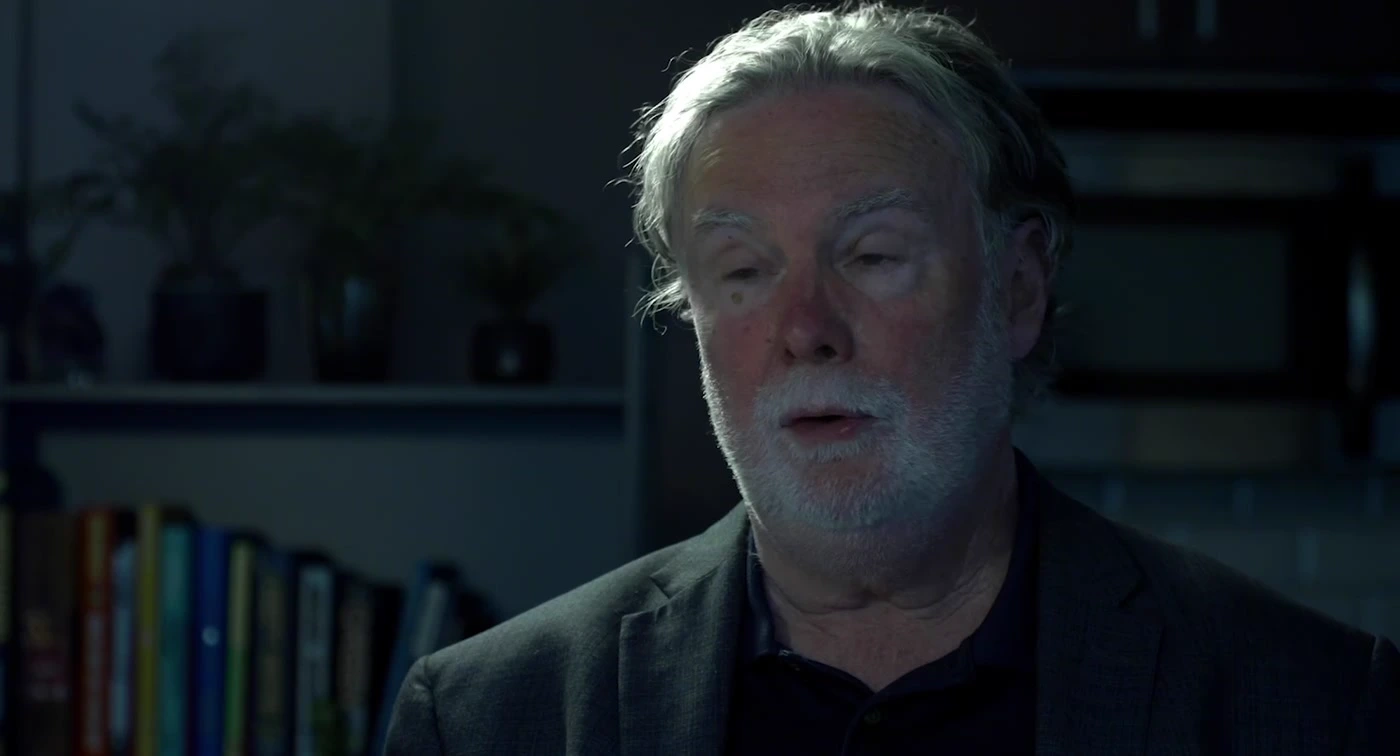
- Student Emmy AwardNATAS National Capital Chesapeake Bay Chapter · 2023
- Official SelectionCommunity Stories Film Festival · 2023
- Official SelectionFlickers’ Rhode Island International Film Festival · 2023
Development
Initial proposal
I began with a logline and mood board to establish the documentary’s concept and tone, then developed a synopsis, poster, character profiles, production timeline, equipment plan, and budget. The proposal became a roadmap for turning the idea into a finished film.
Securing credible interviews was central to the project. I interviewed former Washington Post reporter Robert F. Levey, retired MPD detective Jim Trainum, and author Blaine Pardoe, whose book Tantamount: The Pursuit of the Freeway Phantom examines the case.
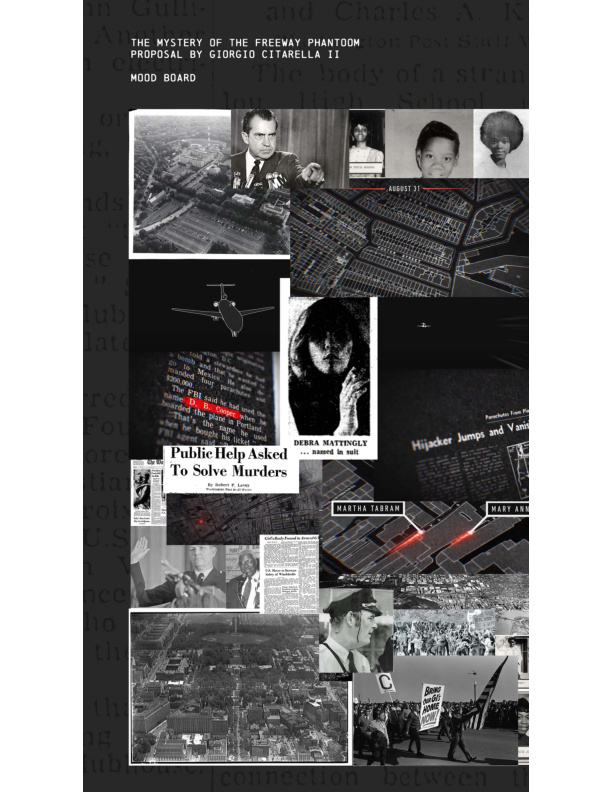
Read the original proposal
Development packet · PDF
The packet also helped me assemble a crew and track the practical decisions behind the production, from scheduling interviews to selecting equipment and managing expenses.
Research & writing
Original A/V script
Over four months of research, I pieced together the case through available reporting, archival material, and interviews. Each revision brought the narrative, visual treatment, and interview structure into closer alignment.
The A/V script paired video direction with narration, interview excerpts, sound design, and image references. Color coding distinguished motion graphics, on-camera monologues, and interviews, making the plan easier to translate into an edit.
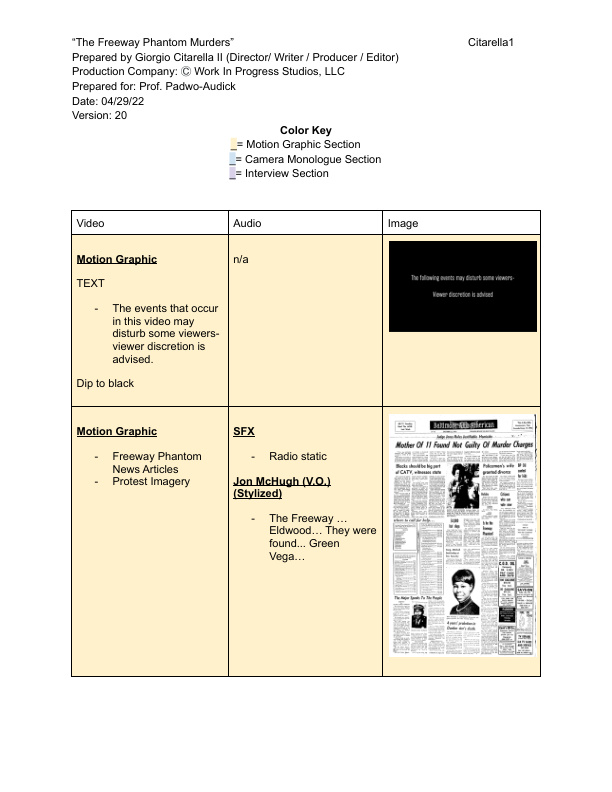
Read the original A/V script
Version 20 · April 29, 2022 · PDF
I spent the remaining months of 2022 bringing the script to life in Adobe Premiere Pro and After Effects, shaping the research into a coherent documentary.
Production
Cinematography
The challenge was to create a consistent look across four interviews filmed in different locations and lighting conditions. I worked with cinematographer Esteban Larach to plan and test the lighting and camera positions before the interviews.
Our setup combined two Sony FS5 cameras with a Blackmagic Pocket Cinema Camera 6K Pro, recording at 29.97 fps. We aimed for the dramatic contrast and cool tones of Errol Morris’s A Brief History of Time, alongside the clarity of a television news interview.
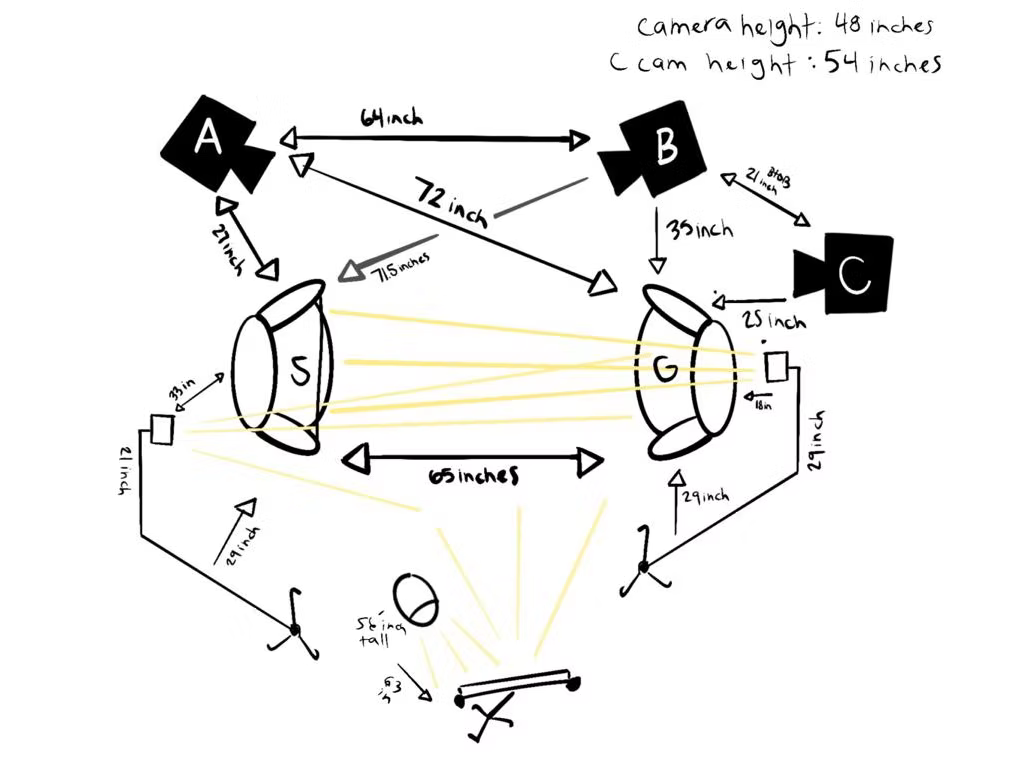
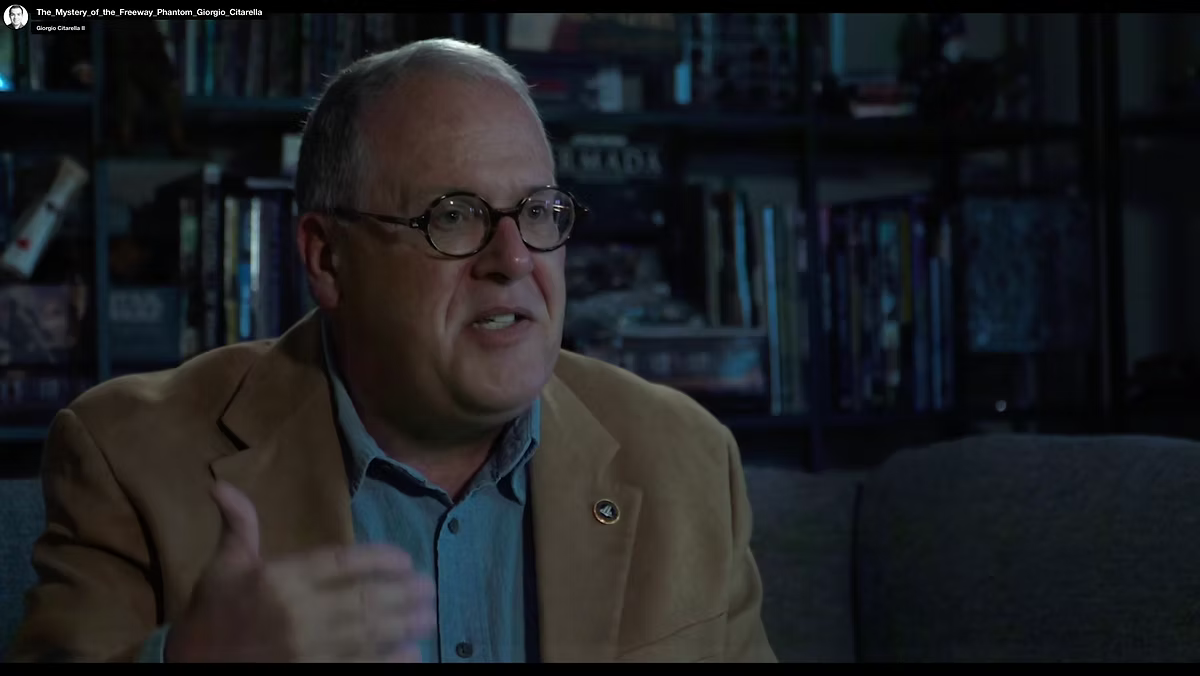
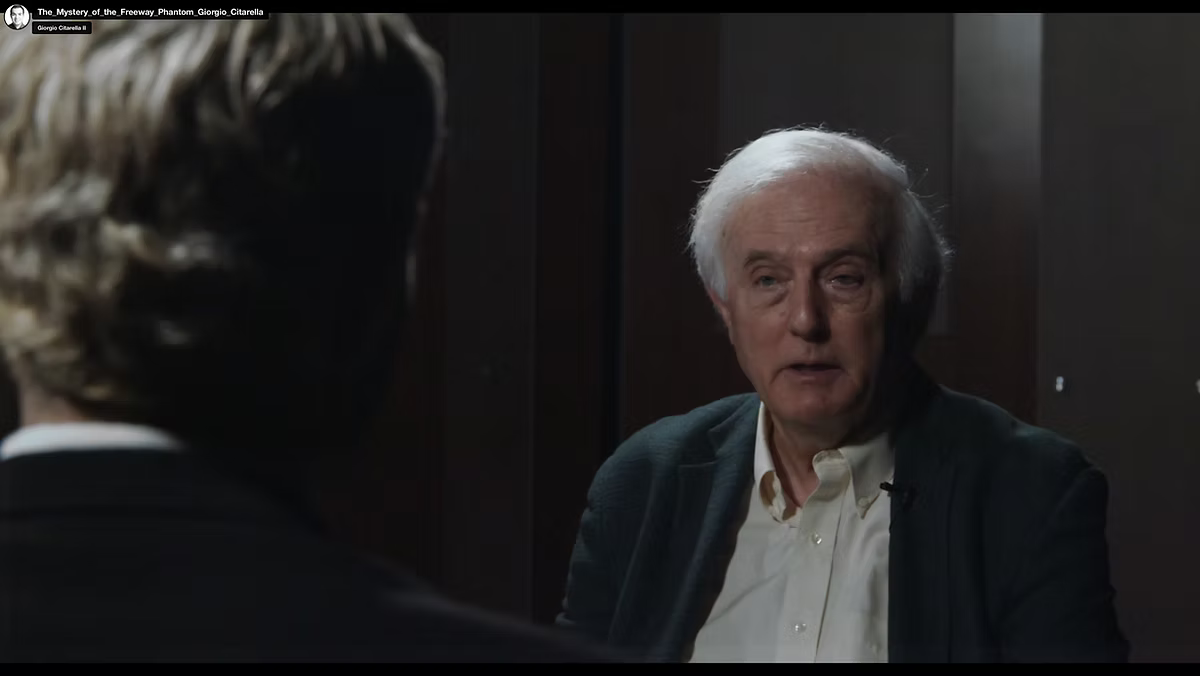
We used ARRI Compact Fresnel 300 fixtures and Godox pocket lights bounced into a white board for fill. Testing and logging each setup helped us carry the visual approach from one location to another.
Post-production
Motion graphics
Early versions relied heavily on motion graphics. I built animated maps, timelines, archival collages, and character introductions in After Effects to connect locations, reporting, and events.
As the edit developed, I learned to be more selective. Many animations were left out because they did not serve the journalistic tone of the final film. That process taught me to judge every graphic by what it contributes to the story.
Lessons from the edit
What I took forward
The three-camera approach gave us options, but it also stretched a small crew. In hindsight, a single-camera setup would have given us more control over each image and made consistency easier to maintain.
The project strengthened my approach to research, interview preparation, production planning, and editing. Its most useful lesson was learning when to simplify: give the interview room to breathe, make graphics earn their place, and keep the story at the center.
Watch the finished film